
Apart from the business logistics at hand, I had heard resentment in both of their voices.
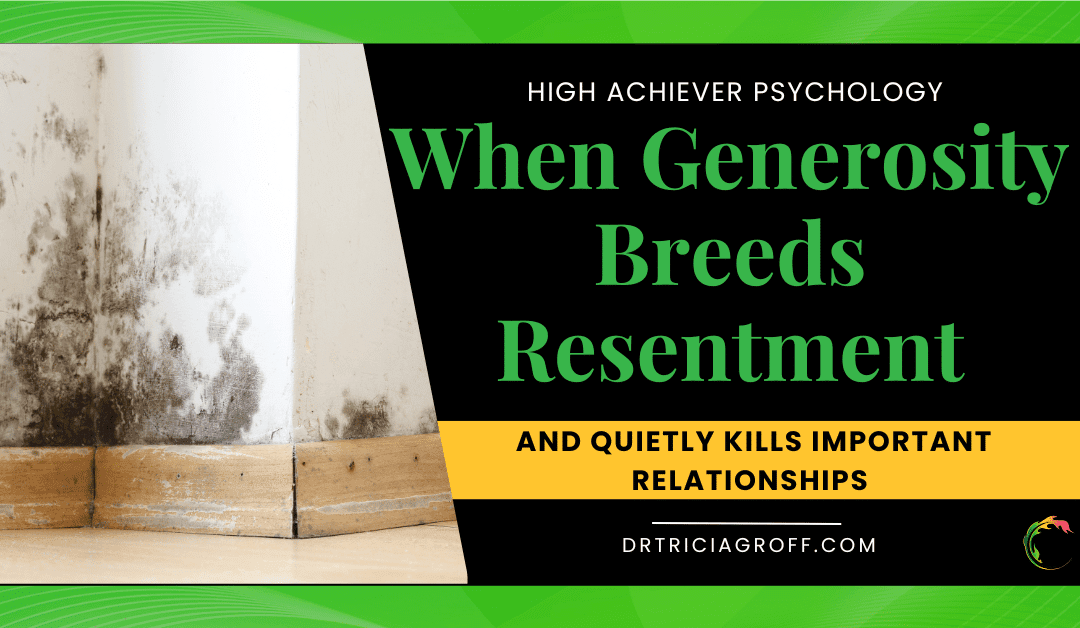
Resentment is an imbalance between what we put into a relationship and what we expect to receive. The imbalance creates a little leak. It seems easier to ignore the leak than to address it, until the day we open the cupboard door and find poisonous black mold.
The Leak Under the Sink
The leak starts when people hurt, disrespect, or take advantage of us. Egregious acts may end the relationship, but less salient injuries create a slow leak under the sink. We want to give people the benefit of the doubt and move on. We want to close the cupboard door and hope that the leak goes away. We might say things like, “I don’t want to make things worse,” or “It’s not a big deal; I just need to accept it,” or “I don’t want to end the relationship.” We say this so we don’t have to face what’s there; however, when we allow the leak to continue, we guarantee black mold.
I predict the end of relationships with a fair amount of accuracy. It’s not because I have extrasensory foreknowledge. Rather, when I hear resentment, I understand the toxicity of it. The duration, the level of investment, and the amount of loss vary, but the end result remains the same. Resentment kills relationships.
When you address the leak early on, you have a chance to save the relationship. You will have more emotional resources to pursue the best outcome. One of my clients experienced this with a new hire. A month after hiring her, he texted me, She is criticizing me as well as the team. I am already feeling resentful. I have to confront her. We planned a script, and he had a conversation with her. Her behavior changed, and the resentment receded. The conversation may have saved her job.
If you like to think the best of people, expect others to treat you as you treat them, dislike conflict, and try to go the extra mile, you are especially vulnerable to resentment. You will enter relationships with the best of intentions, give more than you should, and delay addressing your frustration. You will hang on to the hope that the situation or the person will change.
If you wait to have difficult conversations, the resentment will build as your emotional resources recede. By the time everything comes to a head, reconciliation will not be an option. If you are engaged in any type of high-consequence relationship — whether it is a business partnership, an investor relationship, or a marriage relationship — a simple conversation when you first notice the leak may save the relationship (and maybe millions of dollars).
Catching the Leak Before It Becomes Black Mold
Prevention starts before the relationship is under stress. One of the lowest-cost yet least-executed actions is to be honest with yourself about relationship fit. It’s easy to ignore the red flags when we see the opportunity in a relationship. This intentional blindness occurs in business relationships and often costs more than the opportunity is worth.
Have direct conversations about your expectations before an engagement begins. Elucidate what you consider “common sense.” The extra clarity helps catch discrepant expectations at the outset, and the initial discussion paves the way for further conversations if a conflict arises. I remember a particular day when I needed to hire a new expert to assist with my pool. I was so frustrated with a previous experience that I was extremely blunt. I essentially said, “Let me tell you what drives me crazy, and in turn, can you tell me the type of customer you hate?” We got it all on the table before we engaged, and now we both know how to win.
Once the relationship is underway, create a system for catching leaks early. Incorporate a weekly or biweekly touching-base routine to discuss updates — something as simple as, “What worked well for us this week? Is there any place where we went off course or any systems we need to change?” The habit allows you to address frustration before it turns into resentment. It also allows you to systemize successes, lending a balanced and productive feel to the conversations.
One of the vulnerabilities that High Achievers struggle with is their gracious tolerance of others’ needs and idiosyncrasies. It is literally one of their best and most heart-warming personality characteristics. Yet, if this is you, you’ll tend to make exceptions to your boundaries out of a desire to please or to be kind. Clear boundaries and expectations protect relationships. You can’t maintain positive energy if you are resentful. When we cross our boundaries to “be nice,” we sow seeds of resentment. If you do make an exception, do not expect appreciation for your effort. This sounds harsh, but the truth is that most people don’t know how much effort we’ve expended to make exceptions. We have an assumption about the amount of appreciation that should occur when we make a sacrifice. We get angry and disappointed if people are not appreciative. We think, after everything I did for this person… The problem is that the other person may not be aware of our sacrifice. Whenever we stretch beyond what feels appropriate, we increase the risk of resentment. We may want to blame them for our feelings, but we started the leak. If we accept the fact that we have a responsibility in preventing resentment, we are better able to set boundaries and appropriate expectations.
The Cost Benefit Analysis of Generosity
There is also value in understanding why this pattern is so predictable. In psychology, social exchange theory posits that people evaluate relationships in terms of costs and benefits — we try to maximize benefits and minimize costs. While the concept may sound mercenary, we do this automatically with no ill intent. Don’t you like relationships where you can have fun with fairly little effort? Compare that feeling to relationships with people you love but who are high-maintenance. A related concept, social equity theory, posits that we subconsciously calculate and compare input/output ratios to see if everyone is getting the same amount out of the relationship for the amount they put in. We can easily understand this by considering how business partners assess equity. Is my slice of the pie appropriate for the amount that I’m investing? It sounds nice to say that we don’t keep score, but most people expect reciprocity in a relationship. When the outcome is less than expected, the ratio is unbalanced, and resentment occurs.
Giving credence to these theories means we accept that we are more likely to feel resentment if we do not see much benefit in the relationship and feel that our efforts are greater than the other person’s, with no increased return. Reducing the amount of effort is one way we can rebalance the equation. Sometimes, my well-intentioned clients debate me about the suggestion to reduce effort. They say that they want to stay consistent, regardless of the other person’s actions: “I want to take the higher road. I want to be generous regardless of the other person’s behavior.” Then they get resentful and angry when the other person continues to disappoint them.
Adjusting the ratio is a short-term solution in a professional environment. High achievers hate giving less. Discuss separation when you see problems in basic alignment. Address painful conversations early to increase the possibility of a thoughtful and respectful separation. Black mold spreads — through teams, through organizations, through the people who depend on you to protect the culture. Sometimes, the best thing you can do for a relationship is end it before the resentment makes that ending ugly.
Dr. Tricia Groff is an executive coach, psychologist, confidante, strategic partner, and author of Relational Genius. She works with high-achieving executives on intersecting systems of personal, business, and emerging change. drtriciagroff.com